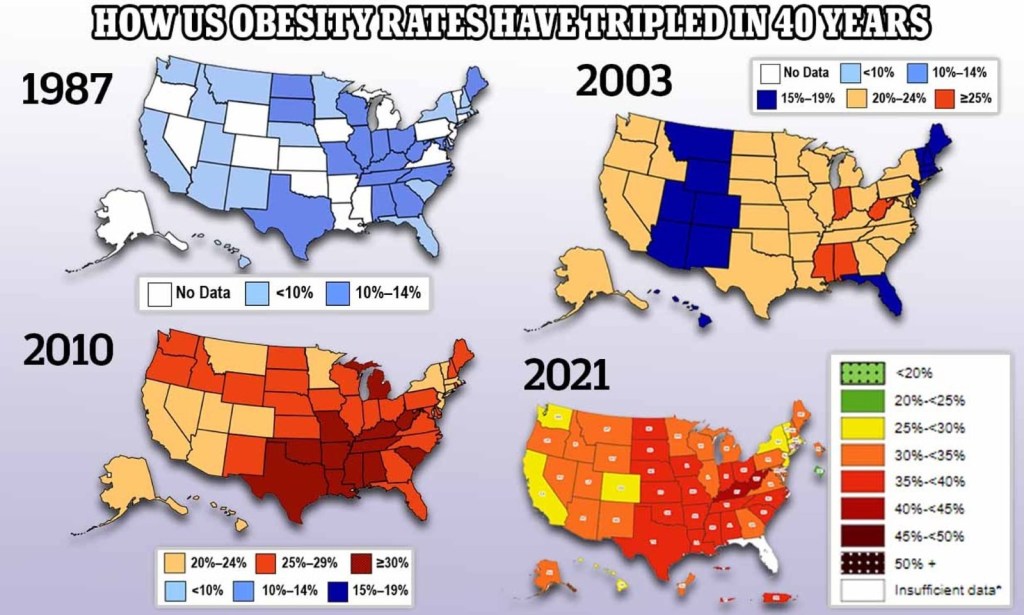
In today’s modern world, the battle of the bulge has become an increasingly prevalent issue affecting millions worldwide. Did you know that obesity rates have nearly tripled since the 1970s?
This image shows what that looks like in the USA. The global trend is similar.
Below you can see what the trend has been worldwide from 1975 – 2014.

I have been studying obesity and its effects on our health for 2 decades now. I’ve been to countless conferences, read countless articles and scientific studies on the topic. Over the decades the only thing that has been consistent is the increasing rate of obesity. Every conference I attend (last one as recently as this past February) has the same conclusions: We need a multi-disciplinary approach to tackle this epidemic. How’s that been working so far? Judging by the statistics, it hasn’t. It’s very clear that local governments play a big role in implementing measures that promote a healthier lifestyle such as raising taxes on unhealthy food choices. Mexico is a great example. Since 2014 they have implemented a tax on sugary beverages, the soda tax, in an effort to promote healthier beverage choices. Despite this measure the obesity rate in Mexico is still rising and is one of the highest in the world. The same is seen in other countries like many European countries where despite higher taxes on unhealthy food items the obesity rate is steadily increasing.
Another major factor in the global increase of obesity is the sedentary lifestyle. We are moving less and less. We have robots cleaning our homes, our groceries are delivered to our door and a lot of jobs can now be done online which has us sitting throughout our workdays. The current recommendation for exercise is at least 150 minutes (about 2 and a half hours) of moderate-intensity aerobic physical activity throughout the week, or at least 75 minutes of vigorous-intensity aerobic physical activity, or an equivalent combination of both. Unfortunately, according to data from the World Health Organization (WHO), only around 23% of adults aged 18 and older are meeting these recommendations globally.
Other important factors that play a role in contributing to obesity are stress and lack of sleep. Chronic stress can lead to changes in eating behaviors, such as increased consumption of high-calorie comfort foods, which can contribute to weight gain and obesity. Sleep deprivation can disrupt hormonal balance, leading to increased hunger and appetite, particularly for high-calorie, high-carbohydrate foods. Lack of sleep can also affect the body’s ability to regulate blood sugar levels and insulin sensitivity, which can contribute to weight gain and obesity over time.
We now also have more and more celebrities promoting a healthy body image, meaning you feel comfortable in your body, and you feel good about the way you look no matter what your size is. This is a very positive development helping especially women but also men with their self-confidence and self-worth, so I applaud that movement. But we must not lose sight of the fact that obesity is considered a chronic disease with many possible complications. It’s not about the numbers on the scale, it’s about the number on the blood pressure monitor and the numbers on your lab results. You don’t have to be the size of a supermodel to be healthy, but there’s also no such thing as a healthy obese person. Even if your medical check-ups turn out normal, it’s only a matter of time before you will suffer the consequences of obesity. You’ve probably heard them numerous times, but I will keep repeating them because with the rising numbers of obesity, we are also seeing a rise in the consequences, and these are preventable!
As you may know, obesity significantly increases the risk of developing chronic diseases such as:
- Type 2 diabetes – Obese individuals are 7 times more likely to develop type 2 diabetes (Source: CDC)
- Cardiovascular diseases – heart disease 2 – 4 times more likely, stroke 1.5 – 2 times more likely (Source: American Heart Association)
- Hypertension (high blood pressure) – 3 times more likely (Source: CDC)
- Certain types of cancer (such as breast 1.5 – 2 times, colon 1.5 times, and prostate cancer – 27% increase in risk of death). Excess body fat results in an approximately 17% increased risk of cancer-specific mortality (Source: American Cancer Society)
- Non-alcoholic fatty liver disease (NAFLD) 2 – 3 times more likely (Source: National Institute of Diabetes and Digestive and Kidney Diseases)
- Sleep apnea (disorder that causes your breathing to stop or get very shallow) 4 times more likely (Source: American Academy of Sleep Medicine)
- Dyslipidemia (Abnormal Lipid Levels) 2 times more likely (Source: National Heart, Lung, and Blood Institute)
- Osteoarthritis (degenerative joint disease) 2 – 4 times more likely (Source: Arthritis Foundation)
- Depression and anxiety (1.5 times more likely) (Source: Obesity Reviews)
But did you also know that obesity is associated with the following?
- Reduced Life Expectancy: Obesity is associated with a decreased life expectancy. Individuals with obesity have a higher risk of premature death compared to those with a healthy weight, primarily due to the increased likelihood of developing chronic diseases.
- Impaired Quality of Life: Obesity can significantly impact an individual’s quality of life by limiting mobility, reducing energy levels, and causing physical discomfort. It can also lead to psychological issues such as depression and anxiety as mentioned before, and also low self-esteem leading to isolation or self-harm.
- Increased Healthcare Costs: Managing obesity and its associated health conditions requires frequent medical visits, medications, and sometimes surgical interventions. The healthcare costs associated with obesity-related diseases can be substantial for both individuals and society as a whole.
- Social Stigma and Discrimination: People with obesity often face social stigma, discrimination, and bias in various aspects of life, including employment, education, and healthcare. This can lead to social isolation, lower self-esteem, and decreased opportunities for personal and professional growth.
- Reduced Mobility and Functional Limitations: Excess weight can strain the musculoskeletal system, leading to joint pain, arthritis, and reduced mobility. Obesity may also impair physical function and make everyday tasks more challenging.
- Infertility and Reproductive Issues: Obesity can affect reproductive health, leading to hormonal imbalances, menstrual irregularities, and fertility problems in both men and women. Pregnant women with obesity are also at higher risk of complications during pregnancy and childbirth.
- Increased Risk of Mental Health Disorders: Obesity is associated with a higher prevalence of mental health disorders, including depression, anxiety, and eating disorders. These conditions can further exacerbate obesity and create a vicious cycle of poor physical and mental health.
- Sleep Disorders: Obesity is a significant risk factor for sleep disorders such as obstructive sleep apnea, which can lead to daytime fatigue, impaired cognitive function, and an increased risk of accidents.
- Risk of Surgical Complications: Individuals with obesity may face increased risks during surgical procedures due to factors such as anesthesia complications, wound healing issues, and higher rates of postoperative infections.
With the vast amount of research that has been done and so much information on what causes obesity and what we can do to reduce it, why are we not succeeding? Why are the obesity rates rising instead of going down? More importantly, what can YOU do not become a part of these statistics?

In previous blogs I’ve mentioned what a positive effect a more plant forward diet has had on my health and wellbeing. The data is out there, but learning from individuals who have their own success stories is way more powerful and inspiring. I encourage you to watch this wonderful podcast “The Promise of Possibility” from my dear friend Maruja Bogaard where she interviews Dr. Saray Stancic who is one of the pioneers of Lifestyle Medicine, about her own journey after being diagnosed with Multiple Sclerosis.
Oscar Wilde once famously remarked, ‘I can resist anything except temptation.’ In today’s food-centered culture, that seems to resonate very strongly. But as we indulge in these irresistible culinary delights, we are also fueling an epidemic of obesity that threatens our collective health.
So, I urge you, dear reader, to take that first step today – make a commitment to yourself, your health, and your future. Together, let’s embark on this journey towards better health, one choice at a time. Your well-being is worth every effort, and the rewards of a healthier, happier life await you.
For further information contact me at vitamail2005@gmail.com.
Bonus recipe
Quinoa tortillas
Ingredients:
1 cup of quinoa (soaked for 20 minutes,then drained)
1 ½ cup of water (add a little more for thinner tortilla)
Optional:
Pinch of salt
Garlic powder (or other spices)
Method:
Place quinoa, water, salt and spice(s) if used in a blender and blend until smooth
Use a ¼ cup measure for each tortilla. Pour the batter in a hot greased pan and flatten out the tortilla with the back of a spoon in a circular motion. Cook for 2 minutes on each side. Add fillings of choice and enjoy.
In this image I used:
Guacamole (mashed avocado with salt, garlic and lime)
Sauteed mushrooms seasoned with garlic, cumin and paprika (you can use taco seasoning)
Vegan sour cream (coconut yoghurt with a squeeze of lemon)
Garnished with pumpkin seeds, cilantro and chickpea “tofu”





 Dr. O, Wellness Wanderer
Leave a comment