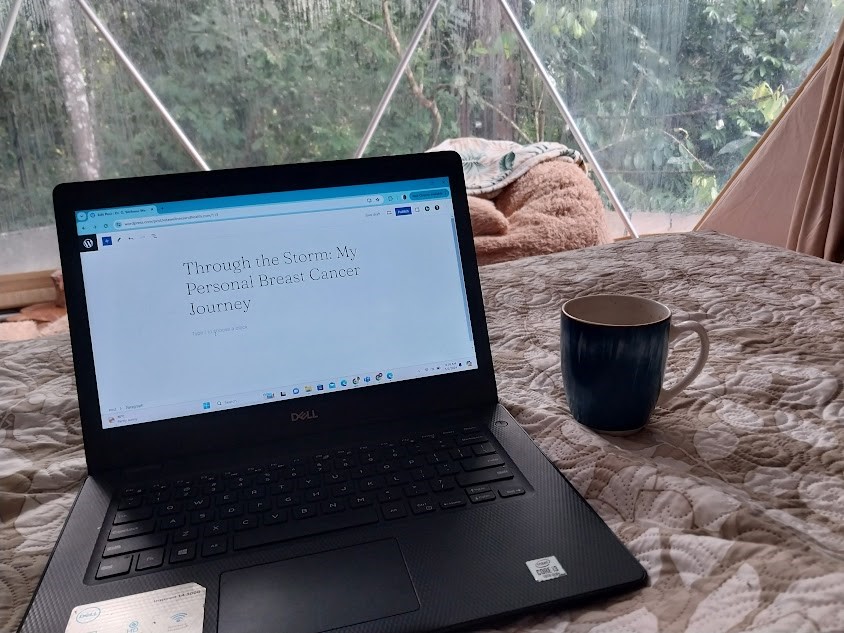
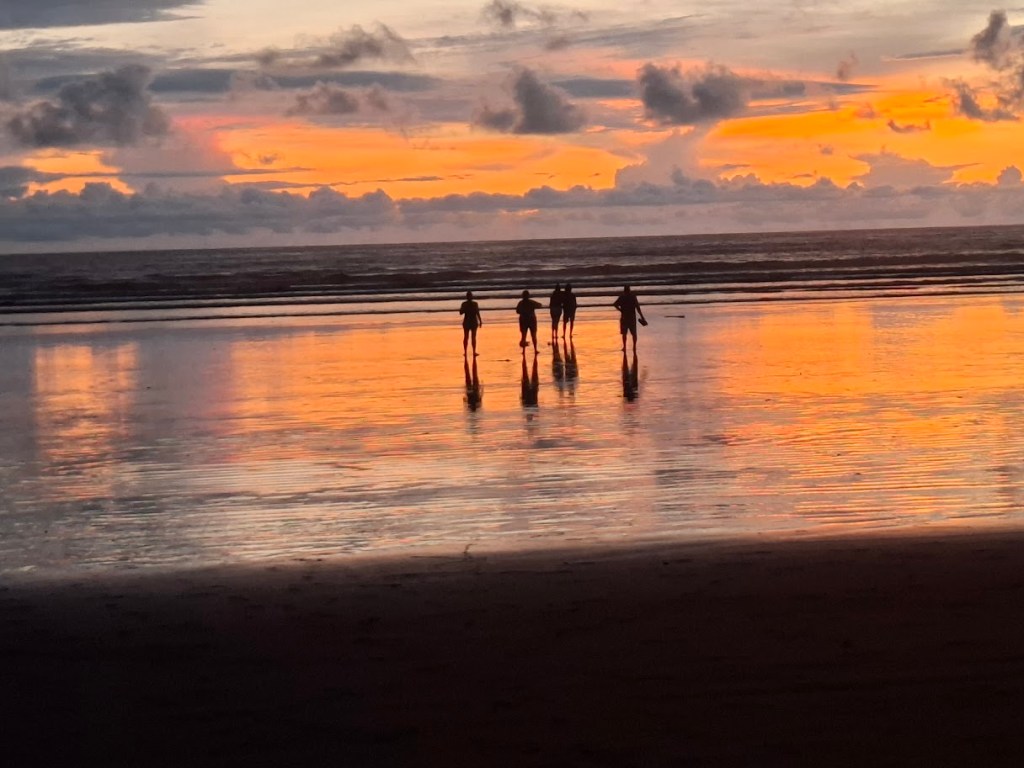
This month marks the 12th anniversary of my breast cancer diagnosis, no small feat. As I’m writing this, I am in Costa Rica in a beautiful location surrounded by nature. Costa Rica has been a big part of my healing journey, both physical as I had 2 of my surgeries here, but also emotional since being surrounded by nature brings peace and tranquility. I feel that when I’m here I can stop the thoughts from racing through my head, even if only for a few days. And with this view, I was inspired.
Let’s start at the beginning. As a single mother at 43 years old my life was a whirlwind of juggling work, kids and barely any social life. I was constantly running and under a lot of stress. One day at work I suddenly felt this sharp pain in my lower back after which I couldn’t move. My colleagues had to help me get home and pick up my kids from school. I was bedridden for 3 days. I even needed help to get to the bathroom. Being a physician myself it wasn’t hard to get an appointment for a CT scan.
While bedridden I discovered a new lump. I had discovered a lump months before due to which I had a mammogram which showed no malignancies, so I wasn’t really worried, but I asked the radiologist if he could just take a look. At first, he said it doesn’t look like anything malignant, but then he said maybe it’s best to have a surgeon take a needle biopsy to be sure.
I called my friend the surgeon who told me to come immediately. As he examined me, I sensed a change in his demeanor. I figured he was just being professional. He said instead of a biopsy he wanted me to do a more detailed mammogram. I told him I had done one 8 months before. He insisted so I went back to the radiologist.
I had the mammogram done and the radiologist told me to come back for the results later. When I walked into his office, he looked at me as if he had seen a ghost. I asked him why he was so startled, and he said he was just looking at my results. He then proceeded to show me the tumor which was a tiny little circle with 3 extensions which to me looked like eyelashes.
I was looking at the images, fascinated because I had never seen this before. He called it an invasive tumor. He gave me the CD with the result to take to the surgeon. It wasn’t until I got into my car when it dawned on me that this wasn’t some patient’s images I had just seen, they were mine. I started crying as the rain started pouring down.
The next moments were like a blur. I went back to the surgeon who took one look at the images and said: I agree, you have breast cancer. I couldn’t believe what I was hearing. I asked immediately if this had anything to do with my back pain. I mean, I went for back pain and came back with breast cancer. How was this even possible? How could it be that I had this terrible disease without even knowing? And now it could even be metastatic? The surgeon looked concerned and told me to take the results to another radiologist.
Fortunately, it turned out to be “just” breast cancer. What followed was weeks of testing and doctor’s appointments, oncologist, surgeon, anesthesiologist, lab work etc. I was now at the other side of the doctor’s table, the patient’s side.
By now most of my friends knew what was going on, so I threw a BBB party: Bye Bye Boob. I mean, it had been good to me until then. It was a source of pleasure, and it was a source of my 3 babies’ first nutrition. The least I could do was throw a farewell party. We had “slippery nipples” (the shots!) and laughed and talked all night.
Less than 2 weeks after the confirmation of my diagnosis I had my first surgery; a lumpectomy. This is where they remove just the tumor, leaving the rest of the breast untouched. They also removed the sentinel lymph node. That’s the first lymph node to which cancer cells are most likely to spread from a primary tumor.
Four days after the surgery at my follow-up appointment the surgeon had bad news. The borders of the incision were also positive for cancer, so I had to have a radical mastectomy. The sentinel lymph node was also positive for cancer, so they had to remove all my lymph nodes.
Exactly a week after my lumpectomy I had a mastectomy. They also placed a port-a-cath, a device under my skin for receiving the chemo treatment. I recovered very quickly after the surgeries and was actually feeling pretty good. I started seeing an exercise physiologist who helped me with special exercises due to which I was quickly functional and in good physical shape for what was to come next: Chemotherapy. I would have 6 rounds with 3-week intervals.
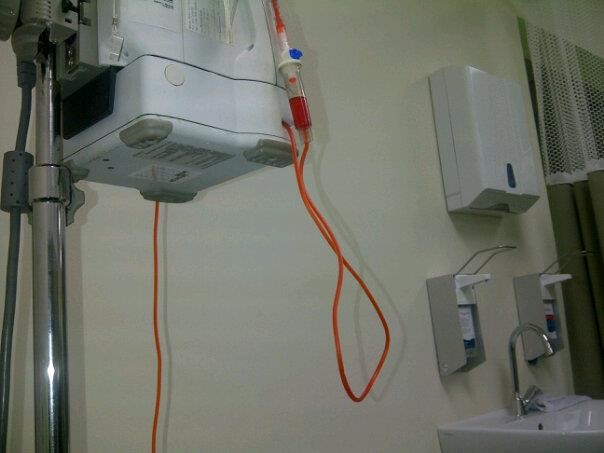
Less than 1 month after my mastectomy I had my first chemotherapy treatment. I still remember as if it was yesterday how I was going up the stairs (avoiding the elevator) and felt my footsteps getting heavier and heavier. This was a first for me. I was feeling great physically and here I was about to get something to make me better that actually would make me feel worse. I just couldn’t wrap my head around it.
After the first session of chemotherapy, I felt great. I went straight for the gym, but my exercise physiologist turned me away. “You need to rest!” she said. “But I feel great!” I answered. She wouldn’t budge. I went home and did what she said. 2 days later I felt the first effects. Nausea, weakness, tiredness. I still dragged myself to the gym because I wanted to be in good shape for the next treatment which was 3 weeks after. I was able to build myself up physically after every treatment, but with every consecutive round it got harder.
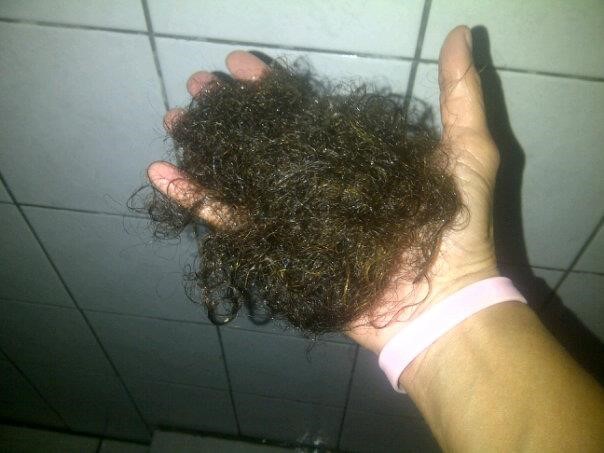
By the second treatment came the hair loss. It happened suddenly. I was washing my thick curly hair when suddenly I had a handful in my hands. I tried styling it but it looked like a huge dreadlock on my head. So, I knew what had to happen. We had a little hair shaving party. Music, drinks, laughter. I didn’t want my kids to know what big of a deal this was. I didn’t want to look in the mirror either.
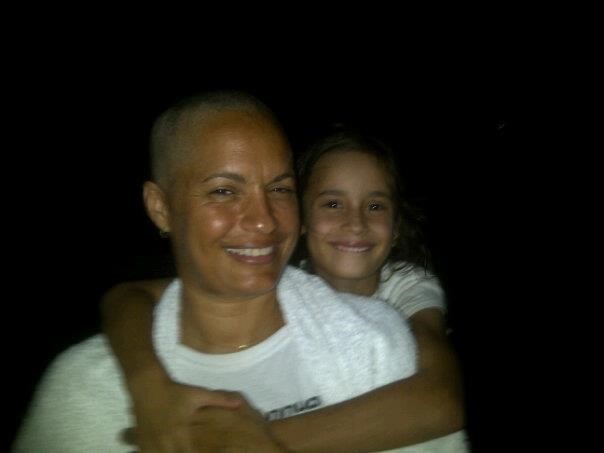
It wasn’t after everything was shaved off that I finally had a look in the mirror, and I burst into tears. I didn’t recognize the person staring back at me. I now officially looked like a cancer patient. In the weeks that followed I also lost my eyebrows and eyelashes. One cannot comprehend until you go through it what this does to you. Wherever I went I would see stares of pity, or people just looking away. I did have a wig but in the hottest month of the year and my new hot flashes, it wasn’t bearable. So, I just wore scarves.
The wig was for special occasions. There was this incident where I had to renew my driver’s license. And of course you have to take a picture. I put on my beautiful wig, but since I didn’t have a hairline, it was very obvious that it was a wig. I put on one of my scarves and went to the driver’s license office. When the moment came the lady said I had to take off the scarf. I whispered that I was bald underneath the wig and you would be able to tell on the photo. She wasn’t being very nice about it and insisted I take it off. I did and I saw her face soften a bit. She took the photo and showed it to me, saying that you couldn’t really tell. I burst into tears, because I could tell. This brought attention from the other ladies behind the tellers. They all came to look at the photo and reassured me that it really was a good photo. At this point I was sobbing. It wasn’t just the photo. It was all the emotions that I kept bottled inside because I had to be strong. I couldn’t fall apart because life didn’t allow for it. At this point the office manager was called in. He said for this time they could allow the scarf. I put the scarf back on, dried my tears and flashed my biggest smile. This marked a moment in my journey where I saw that complete strangers were able to be so compassionate, without even realizing what a big impact this had made.
The weeks that followed were a whirlwind of mixed emotions. On one hand I was making jokes about my uni-boob, feeling like a transvestite when taking off my wig and the one boob prothesis, or laughing about seeing my swim prothesis (which I found out floats) on the other end of the pool when we were staying in a hotel. What no one knows was the sadness when I was alone in from of the mirror, seeing my mutilated body and bald head. On a positive note, I didn’t need to make waxing appointments for a good while and my skin felt baby soft.
After the 4th chemo session, right before the 5th one, we went on a cruise. This was planned months before my diagnosis and was non-refundable so the oncologist scheduled my treatments in a way I could still go. I did feel weaker at this point but since this was our first cruise I didn’t want to ruin the experience for my kids. I was able to get to the gym every morning, got encouragement from people on the cruise including a lady saying that she also had cancer and was rooting for me. Another example of complete strangers making an impact.
The last chemo round was the hardest. At this point I was physically and emotionally exhausted. My father had been hospitalized and because my elderly parents lived alone in a big house with lots of stairs, I moved them in with me. Seeing my father deteriorate was difficult. My mother was struggling with taking care of him while also trying to help me. It was overwhelming to say the least. I asked my oncologist if I could be admitted to the hospital after the last round, just so I could have a few days to myself.
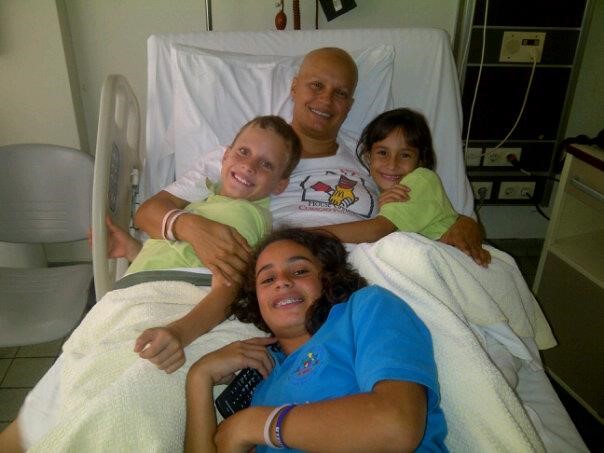
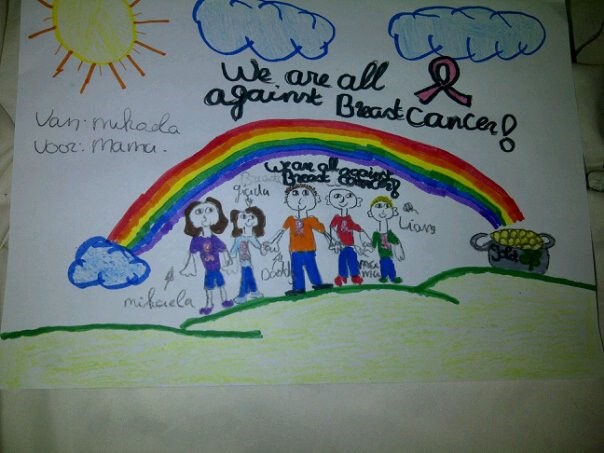
My children were my rocks! They were the only reason I kept going. They would encourage me, draw beautiful paintings, tell me that even without hair I was the most beautiful woman in the world.
The chemotherapy was hardest 2 – 3 days after the sessions for the first 3 rounds, and 4-5 days after the sessions for the last 3 rounds (2 different combinations of chemotherapy). The first 3 left me mostly nauseous and weak, while the last 3 made me feel extremely sluggish and tired. My fingers and feet felt numb. I couldn’t even button up a shirt. The menopause symptoms were debilitating. But now it was over, the sessions were done. I could rebuild my strength now. Little did I know there was this little hormone blocker which would do a number on me. I was disappointed that my energy levels weren’t coming back. I would have trouble getting out of bed, felt pain all over my body as if I had rheumatism, and started gaining more weight (chemotherapy had already packed on some pounds). I did my best by going to the gym, watching what I eat, but nothing helped.
I was getting more and more depressed. I was warned of this by a fellow pink sister. Once the treatments are over, and the attention everyone was giving you subsides, you’re left to deal with the consequences. You see, people are very involved during the active phase of treatment, but afterwards you are left to fend for yourself. The doctor appointments become less, the “hey how are you doing” is less frequent, and everyone returns to their own busy lives. Not because they don’t care, they just figure it’s now all over and you are OK again. This couldn’t be further from the truth.
I slowly started working again against the advice of my colleagues. I needed to feel useful again. I was working as an occupational health physician and lo and behold, one of the first patients I saw was a lady with metastatic liver cancer. I was being shielded from these kinds of patients by my other colleagues but somehow, she slipped through the cracks. She was told that she had 3 more months to live. She also had just a few more days of disability benefit left, leaving her without an income and no way to care for her small children. I was devastated. How could a system be so cruel? I wrote to my boss requesting an extension. It was a long shot, but he immediately approved it. She received an extension of 6 months. The next time I saw her I didn’t even recognize her. She was wearing make-up, looking great! She had a new lease on life, ended up living 1½ more years.
I felt I was getting back into my rhythm. One day I felt a small swelling in my right armpit. I immediately went to have an ultrasound. Since there was scar tissue from the previous lymph node removal, it was advised to get a specialized MRI which at the time was not available on the island. I was sent to Bogotá for the MRI. I was put through a bunch of other tests there, including a needle biopsy of the swelling. A couple of weeks later the result came back positive for cancer. This is where I completely lost faith in my body. I was feeling betrayed. I did everything by the book. How could I still have cancer? I was immediately sent back into surgery removing more lymph nodes.
When the pathology results came back, they said there was no cancer to be found. Was the diagnosis wrong? Did they miss the cancerous swelling? I didn’t know what to believe anymore and this time I fell into deep depression. A few months after that a very dear friend of mine, who is like a sister to me, lost her twins after a 32-week pregnancy. And a couple of weeks later my father came to pass. I lost it. The pain I felt over these losses was unbearable. I thought the pain of living seemed more unbearable than the thought of dying. While I never planned suicide, I was questioning what the point was of living if life was so painful.
I was already in therapy, and my oncologist placed me on anti-depressants. The side effects of the medication eventually became unbearable. I would suddenly feel a sort of disconnect where momentarily I didn’t know where I was. This would also happen while driving. Scared of what the consequences could be, I stopped taking them. My life at this point was a constant struggle. Most people didn’t realize it because I would put on a brave smile because hey, that’s what survivors do. We wear pink, we go on walks, and we share our stories of survival. In the meantime, I was becoming more and more withdrawn. Less socializing, just work and home. At home things weren’t easy either. All the emotions took a toll on an already struggling relationship.
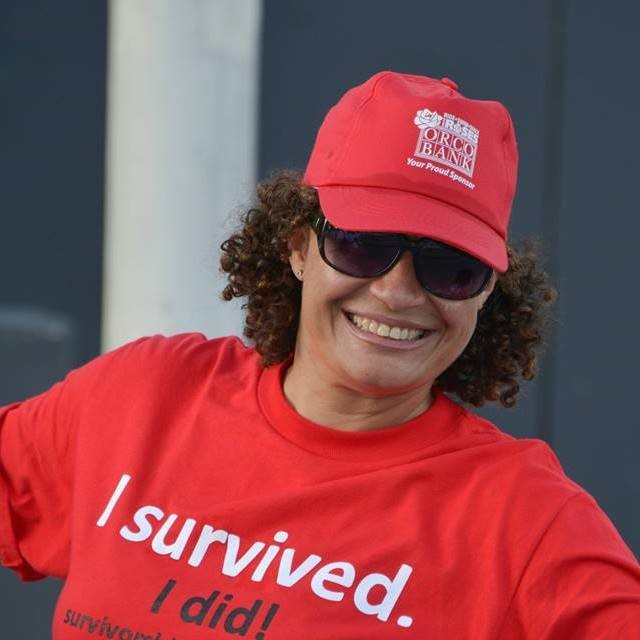
I had my first breast reconstruction and preventive mastectomy of the other breast a little over a year after my mastectomy (the second one was after a delayed complication of one of the breasts due to which I needed to have the implants changed). This was done in Costa Rica. My oncologist gave me the name of a surgeon from whom he had seen the best work, and by chance (or not) I met the patient he was referring to the same day I contacted the surgeon. It seemed like fate. The surgery had some complications, but the recovery went well, and I was feeling like a part of me was restored. Not as before, but close enough. But I was still feeling depressed.
Then one day, I went to get my hormone blockers from the pharmacy, but when I got home, they were nowhere to be found. I looked everywhere int he car, nothing. So, I planned to buy them the next day at the pharmacy, but forgot (chemo-brain, another fun side-effect). Days turned to weeks, but I noticed I was slowly feeling better. At my next appointment with the oncologist, I mentioned this. I also said I’m never going back on the pills again. I was also feeling better emotionally.
The oncologist said that he just came back from a breast cancer conference where they linked the use of this medication to depression. I’d been using this for 2 years and still had 3 years to go. He said that if my menstruation didn’t come back within the next 2 months, that would mean I’m not producing estrogen. My cancer was Estrogen receptor (ER) positive. The cells of this type of breast cancer have receptors that allow them to use the hormone estrogen to grow. It took 4 months for my menstruation to come back. This was probably the reason I was feeling so good and even losing some of the weight I had gained.
I had 2 choices, go back on hormone blockers (the oncologist suggested a different medication which basically had the same side-effects), or have my ovaries removed. I opted for the latter and chose to have my uterus removed too. No more need for PAP smears!
Here came menopause, the sequel. The symptoms were worse this time. Severe hot flashes, back into depression, and now something else, extreme vaginal dryness which later I would find out would lead to vaginismus, a topic not mentioned by any caregiver and with little to no information on the internet. This will be a separate topic for a future blog, but I will just say that the first attempt at dating again after my relationship ended, was a rude awakening. The pain was excruciating, and I decided then and there that I would just remain single. Having had several surgeries, my breasts had no sensation either, so the pleasure factor was not there. Who had time for a relationship anyway, between work and home? Looking back, it was a cop out. It was easier to say I wasn’t interested than explain why I couldn’t have sex.
According to some studies, the reported prevalence of vaginismus varies widely, ranging from 5% to 17% in different populations. However, these numbers may not accurately reflect the true prevalence due to stigma, lack of awareness, and cultural factors that may influence reporting. They also date all the way to a study done in 2012 and quoted over and over again in different studies and articles. I mean, it took me 8 years to finally look into possible treatments. I’m still doing research and looking into the options here in Curaçao. On a small island the options are very limited. If you’re lucky to live in a place that has a clinic specialized in sexual dysfunction, don’t hesitate to seek help!
This is where I am now. All the little pieces are starting to fall into place. It doesn’t happen overnight. There’s no timestamp on it. Take your own journey step by step, day by day, and be patient with yourself. Where will my search for wellness take me next? Stay tuned. My suitcase is ready!
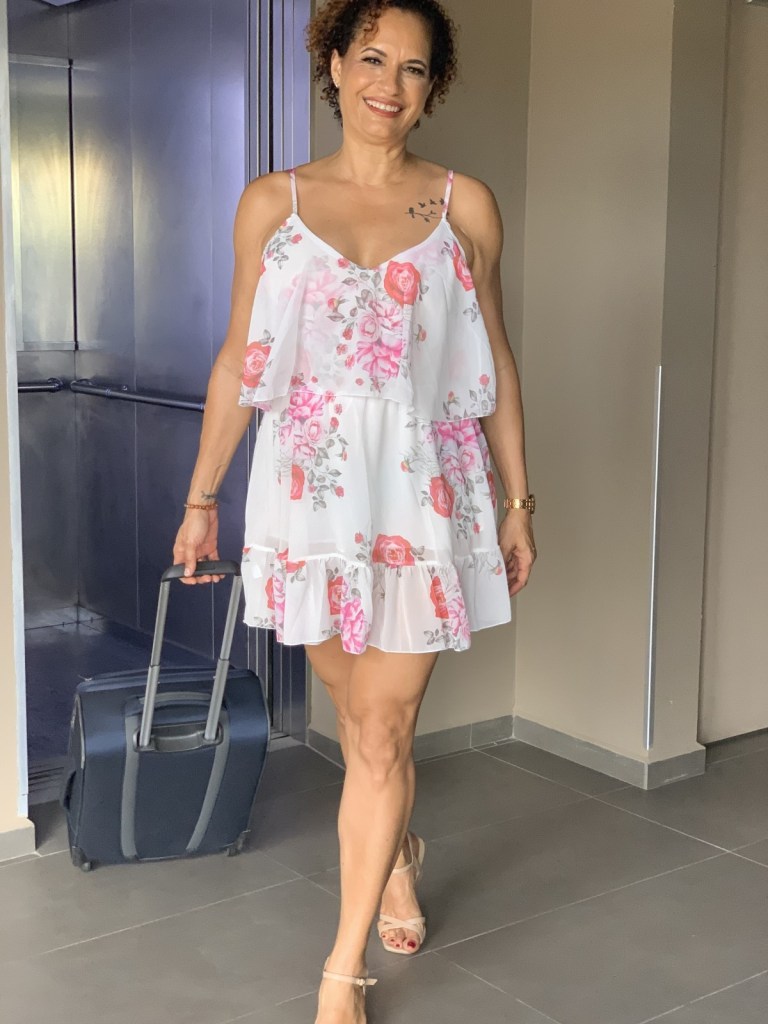




 Dr. O, Wellness Wanderer
Leave a reply to Marly Oosterhof Cancel reply